


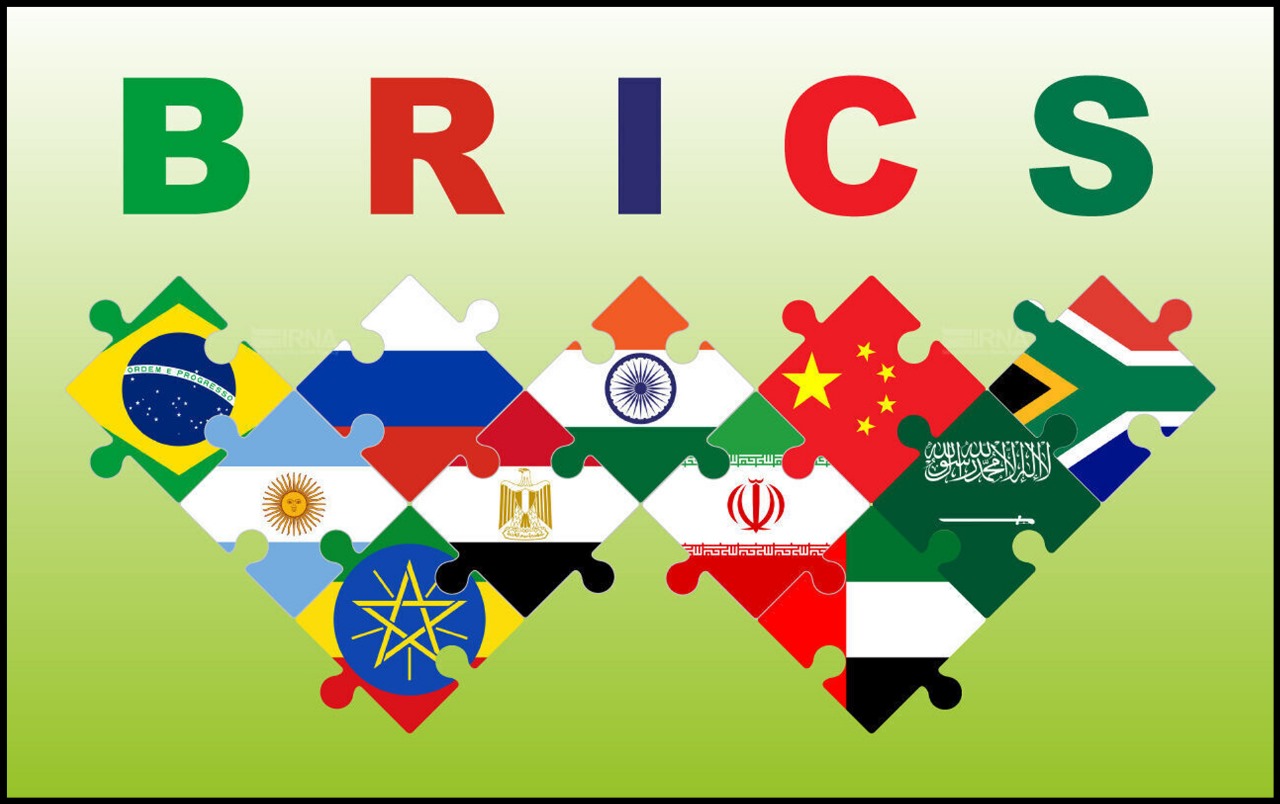

BRICS leaders gathered over the weekend, focusing on a bold plan to cut back on the U. S. dollar by boosting trade in their own currencies. They aim to sidestep geopolitical tensions and sanctions that have hit some members hard. Yet, experts question whether the bloc can truly break away from the dollar's dominance.
The idea of 'de-dollarization' crops up now and then, especially when confidence in the U. S. economy dips. Right now, the dollar reigns supreme in global finance, making up 89% of the forex market as of April. The euro and yen trail behind, accounting for 29% and 17% respectively.
South African President Cyril Ramaphosa stressed the importance of BRICS enhancing local currency use and bettering cross-border payment systems. Energy giants like Russia, part of BRICS, have struggled with dollar trade due to U. S. sanctions. They push for developing their own payment and settlement systems.
But ambitions hit a wall due to lack of financial and macroeconomic unity within BRICS. Experts highlight trade imbalances and distrust among key players, like China and India, as big roadblocks. Jayant Krishna, a senior fellow at the Center for Strategic and International Studies, pointed out the missing unified framework to replace the dollar's global trust and liquidity.
Historically, BRICS nations have been the main champions of de-dollarization. Former U. S. President Donald Trump even threatened tariffs if they tried to create a currency to rival the dollar. In 2023, BRICS nations made up 27% of global output and 24% of merchandise exports, a United Nations Trade and Development report showed.
The report found room for cooperation, yet noted that intra-BRICS trade only made up about 5% of world trade in 2023. Despite talk of expanding trade in national currencies, there's little concrete action. The BRICS 2026 declaration skipped over a common currency or detailed plans for using local currencies in trade settlements.
The BRICS Payment Task Force is on the hunt for practical solutions for cross-border payments. But Reema Bhattacharya, head of Asia research at Verisk Maplecroft, noted that the shift in trade settlements between Russia and China towards rubles and yuan was more about U. S. sanctions than a coordinated BRICS strategy.
Most BRICS currencies don't have the deep, liquid markets needed to make exporters accept them, keeping dollar invoicing the norm for global commodities. Bhattacharya also pointed to the India-China rivalry as a big hurdle for BRICS unity. Both seek strategic autonomy from Washington but are competitors in many sectors.
China ranks among India's top trading partners, with trade hitting a record $151.1 billion by March 2026. But India's trade deficit with China also grew, hitting $112.16 billion. Meanwhile, trade with the U. S. was about $239 billion in 2025, with a $58.4 billion goods trade surplus.
With these dynamics, moving away from the dollar might not favor India, which has a big trade deficit with China. Krishna Bhimavarapu, APAC Economist at State Street Investment Management, noted differing priorities among BRICS members. Russia wants to cut dollar exposure due to sanctions, China wants more global use of the renminbi, and India backs more rupee use.
In the end, no BRICS-led alternative currently rivals the dollar's liquidity, market depth, and global acceptance. The path to de-dollarization is full of hurdles, and the bloc's ambitions might stay more aspirational than practical for now.


