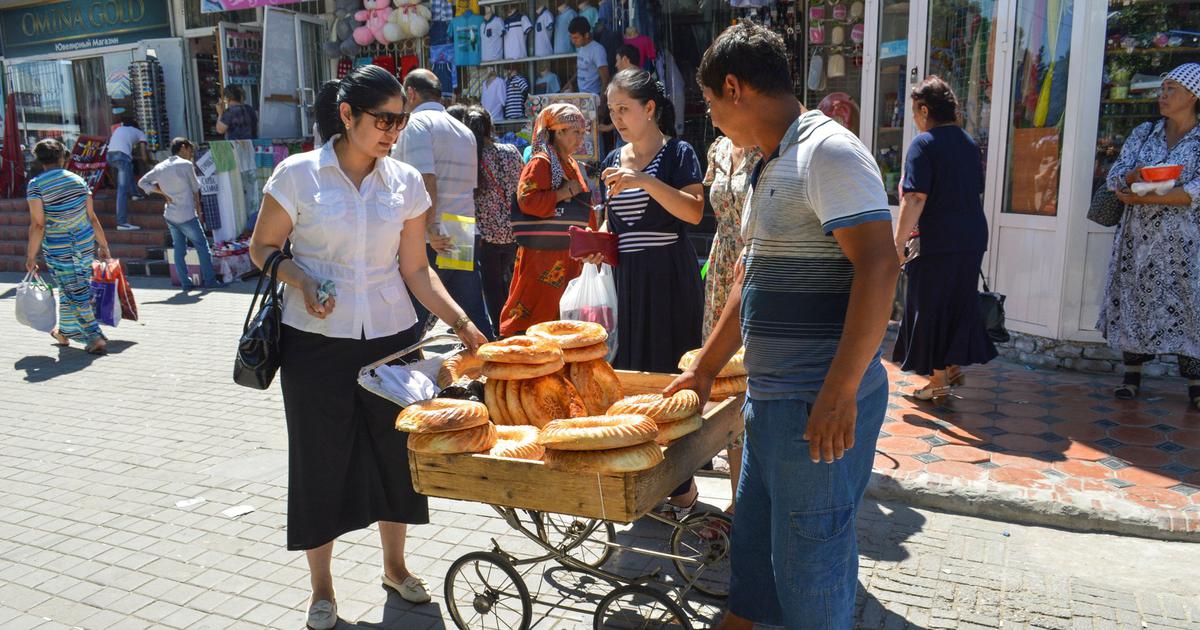
Scroll.in reports: BOOK EXCERPT Travelogue: An Indian woman writes about travelling solo in Uzbekistan’s Tashkent (and elsewhere) An excerpt from ‘Rootless and Restless: A Woman’s Search for Meaningful Adventure in Distant Places’, by Shivya Nath. Shivya Nath 12 hours ago Share Share on Facebook Share on X Share on LinkedIn Share on BlueSky Share on Threads Share on Reddit Copy Link Email Print Add Scroll on Google iOS App Android App A scene from the streets of Tashkent, Uzbekistan. | Francisco Anzola/CC BY 3.0 When the airport taxi stopped at the gate of my guest house in Tashkent, I found myself in a house that was probably 100 years old, with an inviting courtyard adorned with fig, apricot and persimmon trees.
The air smelt earthy, like the onset of spring, as though the trees were exhaling the aroma of the earth. Before showing me to my room, Gulnara – my hostess with beautifully wrinkled eyes and hair hidden behind an oramal (traditional cloth kerchief), who appeared to be in her sixties – invited me for a steaming cup of green tea and tender melons so sweet they could’ve been injected with sugar. Watching the crimson sun make its final descent towards the horizon, Gulnara and I chatted in broken English and Uzbek/Russian words I struggled to decipher but tried to interpret through her expressive eyes.
Background
She wistfully reminisced about her childhood in Bukhara, the Soviet times, the mohallas (neighbourhoods) of Tashkent and the way the city had changed since she had arrived here as a new bride. By the time I went to my room, I felt like I had arrived in the house of a friend’s grandmother instead of a country unknown to me.If I didn’t need to fly into Tashkent, I probably would have skipped it, given my preference for spending time in the countryside. I had given myself all of the following day in the city, but my expectations were low.
Key facts
- The air smelt earthy, like the onset of spring, as though the trees were exhaling the aroma of the earth.
- I had given myself all of the following day in the city, but my expectations were low.
- With its broad avenues, tree-lined walkways, homogenous buildings and busy streets, it appeared right out of the Soviet era – seemingly devoid of soul and character.
- Thanks to Gulnara’s recommendations, though, I found some of its ancient charm in small by-lanes.
- Just like she’d described, old mohallas with stone and mud houses built around vine-covered courtyards could still be found here and there.
What this means
With its broad avenues, tree-lined walkways, homogenous buildings and busy streets, it appeared right out of the Soviet era – seemingly devoid of soul and character. Thanks to Gulnara’s recommendations, though, I found some of its ancient charm in small by-lanes. Just like she’d described, old mohallas with stone and mud houses built around vine-covered courtyards could still be found here and there.
I peeped in to see raucous kids playing a game of marbles instead of being absorbed on their phones! Tashkent was named after these traditional neighbourhoods, she had explained, literally meaning “stone place”.The city had been built and destroyed multiple times. In the 13th century, its Turkic and Persian influences were battered down by Genghis Khan’s army.
Originally reported by Scroll.in. This story has been edited and re-presented by BRIC Team.