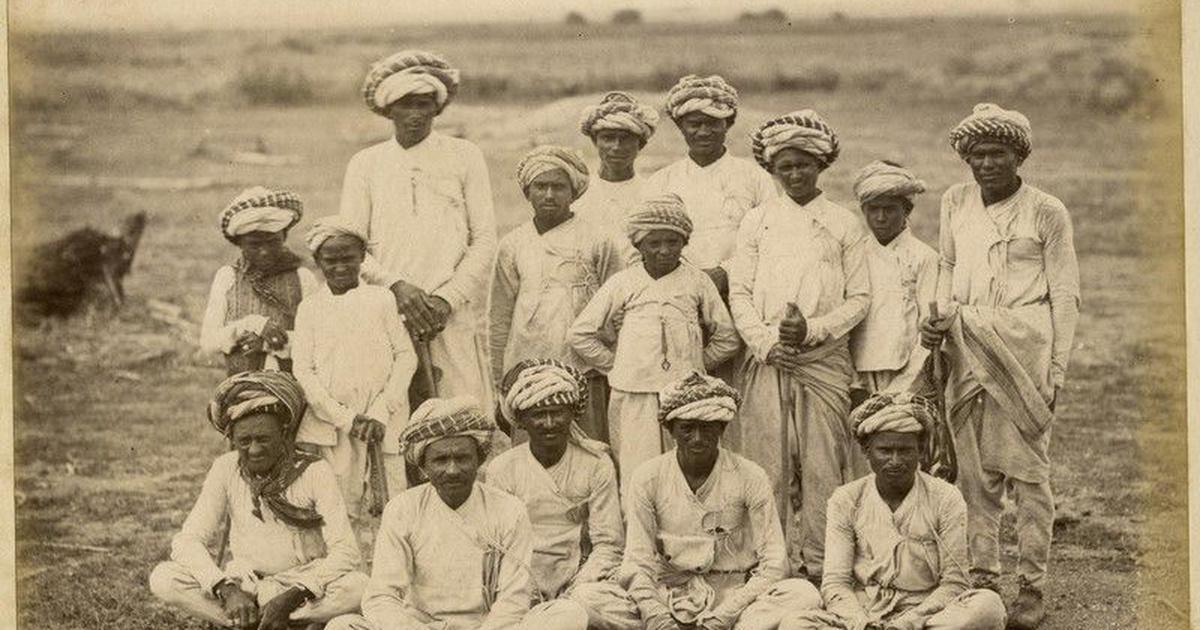
Scroll.in reports: BOOK EXCERPT This book records the Bhil tribes’ resistance movements against Rajputs, Marathas and the British An excerpt from ‘Bhil Revolt: A Century and a Quarter of Struggle’, by Subhash Chandra Kushwaha, translated from the Hindi by Naresh Nadeem. Subhash Chandra Kushwaha & Naresh Nadeem 12 hours ago Share Share on Facebook Share on X Share on LinkedIn Share on BlueSky Share on Threads Share on Reddit Copy Link Email Print Add Scroll on Google iOS App Android App The Bhils of Sindh. Representative image.
| Public Domain The study of the Bhil revolts in Khandesh, Barwani and Alirajpur in separate chapters has been a challenging proposition. All these areas were adjacent to and also dependent administratively upon one another. Barwani and Alirajpur shared borders with Khandesh and Gujarat and were ruled by Rajput thakurs who were, in turn, controlled by the British.
Background
Internally, these states remained autonomous until India’s independence. After the British had established a foothold in Khandesh, the army-supervised process of Bhil settlement gathered momentum in Barwani from 1833 onwards. The Bhil chiefs were agitated at the time and the British soon realised that they would not be pacified until the Barwani state restored their rights.
Key facts
- | Public Domain The study of the Bhil revolts in Khandesh, Barwani and Alirajpur in separate chapters has been a challenging proposition.
- All these areas were adjacent to and also dependent administratively upon one another.
- Barwani and Alirajpur shared borders with Khandesh and Gujarat and were ruled by Rajput thakurs who were, in turn, controlled by the British.
- Internally, these states remained autonomous until India’s independence.
- After the British had established a foothold in Khandesh, the army-supervised process of Bhil settlement gathered momentum in Barwani from 1833 onwards.
What this means
The situation demanded a balance between oppression and the establishment of a security system. When, by the end of the 1830s, the Bhils had not received their due rights (an agreed upon share in fixed revenue), they perforce took to vandalism. At the beginning of the 1840s, colonial policy concentrated on using arms against rebellious Bhils.
In the middle of the decade, British officials inspected the forests of Barwani and investigated the claims of Bhil chiefs. However, as the Rajput king remained indifferent, their raids continued. As a result, the second half of the 19th century saw two major insurrections in the Nimar region – one in Barwani and the other in Alirajpur.The Bhil revolt raged in Barwani from 1833 onwards following the arrest of one Hatania.
Originally reported by Scroll.in. This story has been edited and re-presented by BRIC Team.