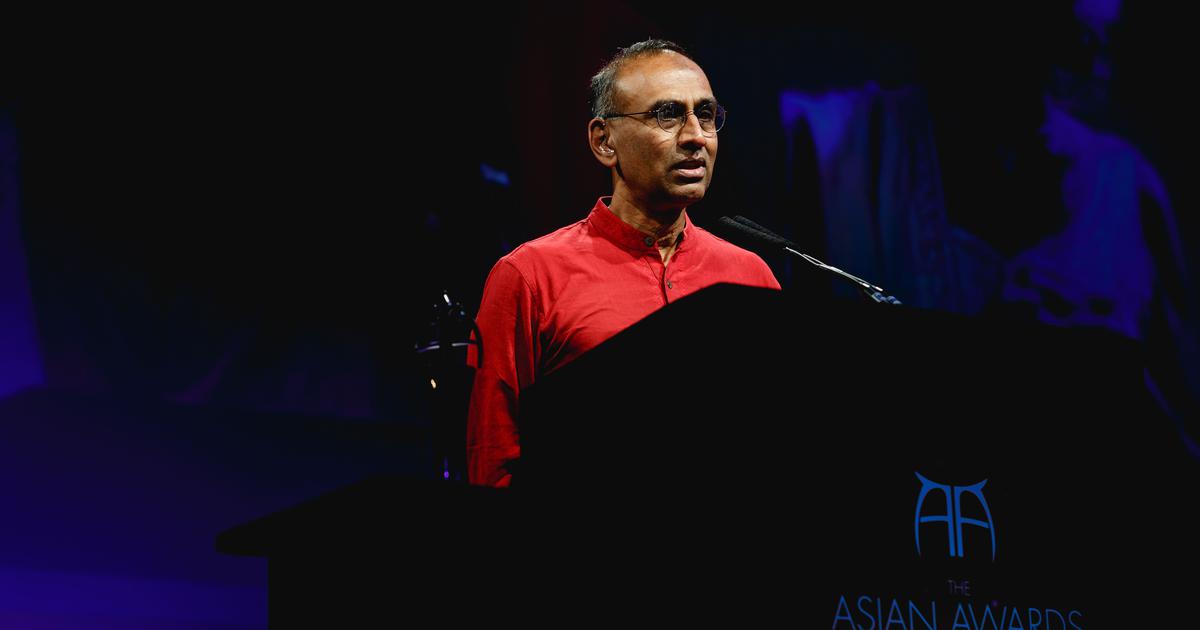
Scroll.in reports: BOOK EXCERPT Nobel laureate Venkatraman Ramakrishnan examines ageing and death from a chemist’s perspective An excerpt from ‘A Touch of Genius: The Wisdom of India’s Nobel Laureates’, edited by Rudrangshu Mukherjee. Venkatraman Ramakrishnan 12 hours ago Share Share on Facebook Share on X Share on LinkedIn Share on BlueSky Share on Threads Share on Reddit Copy Link Email Print Add Scroll on Google iOS App Android App Venkatraman Ramakrishnan was awarded the 2009 Nobel Prize in Chemistry. | The Asian Awards/Flickr Whenever I walk along the streets of London, I never cease to be amazed by a city where millions of people can work, travel, and socialise so seamlessly.
A complex infrastructure, and hundreds of thousands of people, all work in concert to make it possible: the London Underground and buses to move us around the city; the post office and courier services to deliver the mail and goods; the supermarkets that supply us with food; the power companies that generate and distribute electricity; and the sanitation services that keep the city clean and remove the enormous quantities of waste we produce. As we go about our business, it is easy to take for granted this incredible feat of coordination that we call a civilised society. The cell, our most basic form of life, has a similarly complex choreography.
Background
As the cell forms, it builds elaborate structures like the parts of a city. Thousands of synchronised processes are required to keep it functioning. It brings in nutrients and exports waste.
Key facts
- | The Asian Awards/Flickr Whenever I walk along the streets of London, I never cease to be amazed by a city where millions of people can work, travel, and socialise so seamlessly.
- As we go about our business, it is easy to take for granted this incredible feat of coordination that we call a civilised society.
- The cell, our most basic form of life, has a similarly complex choreography.
- As the cell forms, it builds elaborate structures like the parts of a city.
- Thousands of synchronised processes are required to keep it functioning.
What this means
Transporter molecules carry cargo from where they are made to distant parts of the cell where they are needed. Just as cities cannot exist in isolation but must exchange goods, services, and people with surrounding areas, the cells of a tissue need to communicate and cooperate with neighbouring cells. Unlike cities, whose growth is not always constrained, the cell needs to know when to grow and divide but also when to stop doing so.
Throughout history, cities were imagined by their inhabitants to be permanent. We don’t go about our lives thinking that the city we live in will one day cease to exist. Yet cities and entire societies, empires, and civilisations grow and die just as cells do.
Originally reported by Scroll.in. This story has been edited and re-presented by BRIC Team.