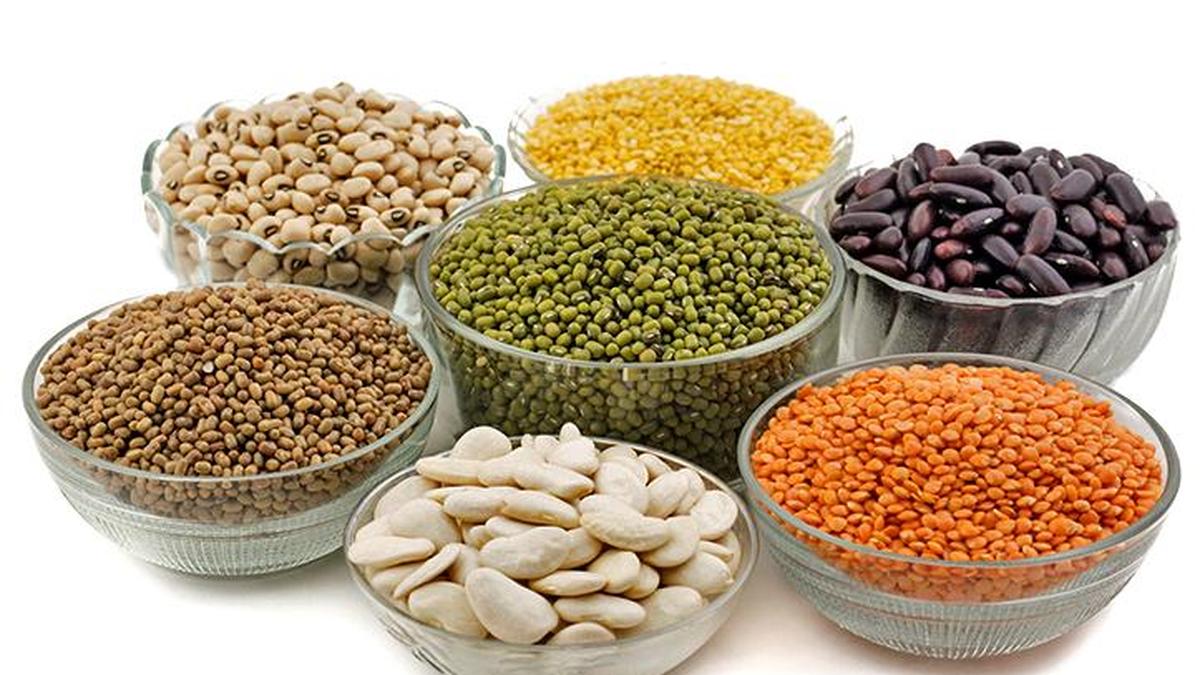
The Hindu reports: Though India is the world’s largest producer of pulses, farm scientists and policy makers are concerned over its low yield as pulses form an integral part of nutritional security owing to their high protein contents. India still depends on imports for nearly 15% of its domestic requirements.Low yield is a cause for concern as pulses also play a crucial role protecting the soil health through nitrogen fixing. Cultivation of pulses has been a natural way of enriching soil without using fertilizer in traditional agricultural methods which is now being adopted in organic farming.About 250 agricultural scientists from across the country met recently in Bengaluru to deliberate on ways and means of increasing productivity as well as the area of cultivation of pulses.
The group meet of All India Co-ordinated Research Project on Kharif Pulses had been organised by the Indian Council of Agricultural Research and attended by its director-general M.L. Jat.“The meeting has discussed various aspects related to enhancing crop production through ensuring availability of improved seeds, proper awareness among farmers on the right combination of pesticides to be used among other issues. Based on these deliberations, a project would be evolved to strengthen the country’s pulse production,” noted Lohithaswa H.C., principal scientist (Plant Breeding) and head of ICAR - All India Coordinated Research Project on Kharif Pulses, and organising secretary of the annual group meet.In rain-fed areas“Pulses ensure economic security for dry-land farmers as they are generally grown in rain-fed areas, during monsoon.
Background
They are easy to cultivate as most of them are short-duration crops. They are advantageous to both growers as well as consumers,” Dr. Lohithaswa told The Hindu.“The pulses production as well as productivity has remained low as most of the pulses producing States grow them only in marginal areas and not as a full-fledged crop.
Key facts
- They are easy to cultivate as most of them are short-duration crops.
- They are advantageous to both growers as well as consumers,” Dr.
- Suresha, who also participated in the meeting, stressed the need for taking up “Speed breeding” programme in pulses to expedite the evolving of new high-yielding varieties.
What this means
Also, the lack of awareness among farmers about the availability of improved seed varieties besides the attack of new pests and diseases are affecting production of pulses,” he observed.According to him, climate change has affected pulses’ production as new pests and diseases have started emerging.As inter cropHe said the group meeting had decided to popularise cultivation of pulses as intercrops in mango orchards; and areca and coconut plantations so that the area of cultivation of pulses would not only increase, but the soil health of these plantations would also improve. He also stressed the need for creating awareness among tail-end farmers in irrigation command areas to take up the cultivation of pulses when there is no adequate supply of water to grow water-intensive crops.Karnataka, which stands second in the country’s kharif pulses production next to Maharashtra, too was facing the problem of low productivity, he pointed out.University of Agricultural Sciences-Bengaluru Vice-Chancellor S.V.
Suresha, who also participated in the meeting, stressed the need for taking up “Speed breeding” programme in pulses to expedite the evolving of new high-yielding varieties.
Originally reported by The Hindu. This story has been edited and re-presented by BRIC Team.