

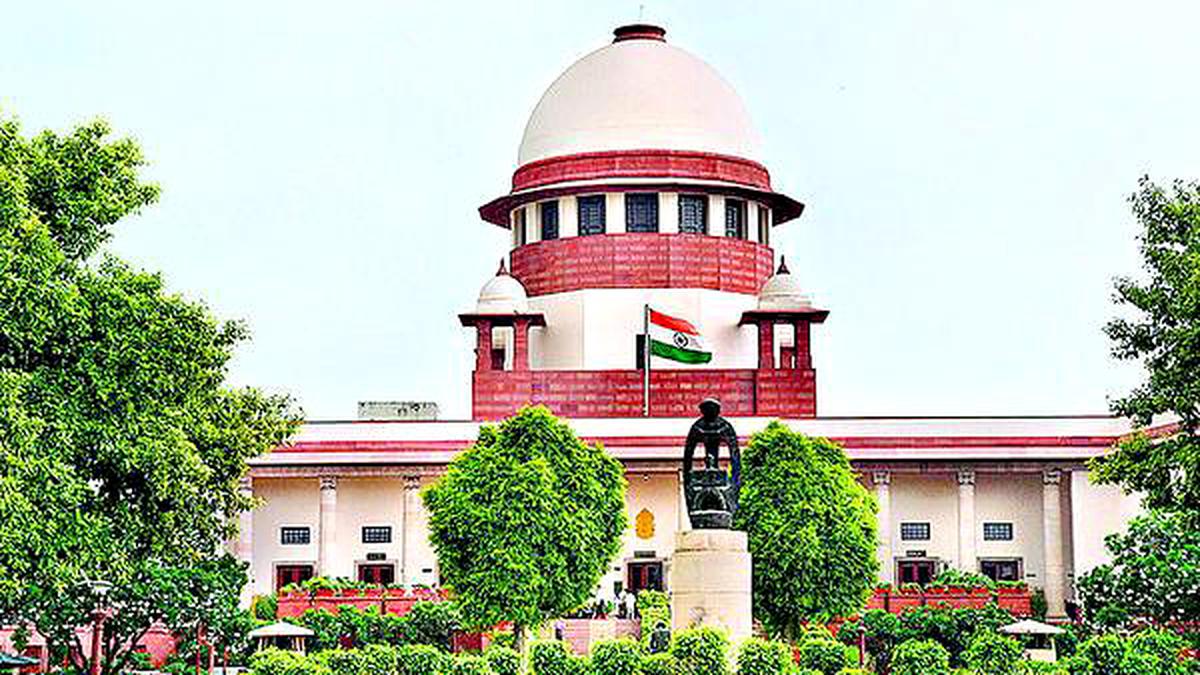
The Hindu reports: The Supreme Court on Monday (May 11, 2026) refused to entertain a plea challenging the constitutional validity of a provision of the Hindu Marriage Act that grants only the wife the right to seek divorce if cohabitation has not resumed for one year or more after a maintenance decree against the husband. "Don't settle personal vendettas via PILs (public interest litigations)," the Bench said.A Bench comprising Chief Justice of India Surya Kant and Justice Joymalya Bagchi dismissed the plea filed by law student Jitender Singh, who appeared in person and sought a "gender-neutral" interpretation of divorce provisions under the Hindu Marriage Act.
Supreme Court asks if there was a 'proper debate' in Parliament before enacting CEC/EC appointments lawSection 13(2)(iii) of the Hindu Marriage Act, 1955, grants only the wife the right to seek divorce where cohabitation has not resumed for one year or more after a maintenance decree against the husband. During the hearing, the CJI questioned the petitioner on how he was personally affected by the provision. "How are you affected?
Background
Do you think you head the entire male gender group?" the CJI asked.The petitioner responded that he had been involved in matrimonial litigation for the last seven to eight years and said the provision should be gender-neutral and equally available to men. "You want to settle personal vendetta through this PIL," the Bench said. "This is what I wanted you to confess.
Key facts
- During the hearing, the CJI questioned the petitioner on how he was personally affected by the provision.
- "You want to settle personal vendetta through this PIL," the Bench said.
- Why should we not impose exemplary costs on you?" the CJI asked.
What this means
Why should we not impose exemplary costs on you?" the CJI asked. Cabinet approves four more judges for Supreme CourtJustice Bagchi said the legislature is competent to enact special provisions for women and children, and it is empowered under the Constitution to do so. "The State can also enact special laws for women and children," Justice Bagchi said."I hope you are not studying law only to conduct maintenance proceedings," the CJI said, while refusing to entertain the PIL.Justice Bagchi further noted that if the petitioner sought complete parity in such matters, "You should have the Constitution amended.
This is a special law." Supreme Court collegium approves names of 10 advocates as judges of Punjab and Haryana High Court
Originally reported by The Hindu. This story has been edited and re-presented by BRIC Team.


