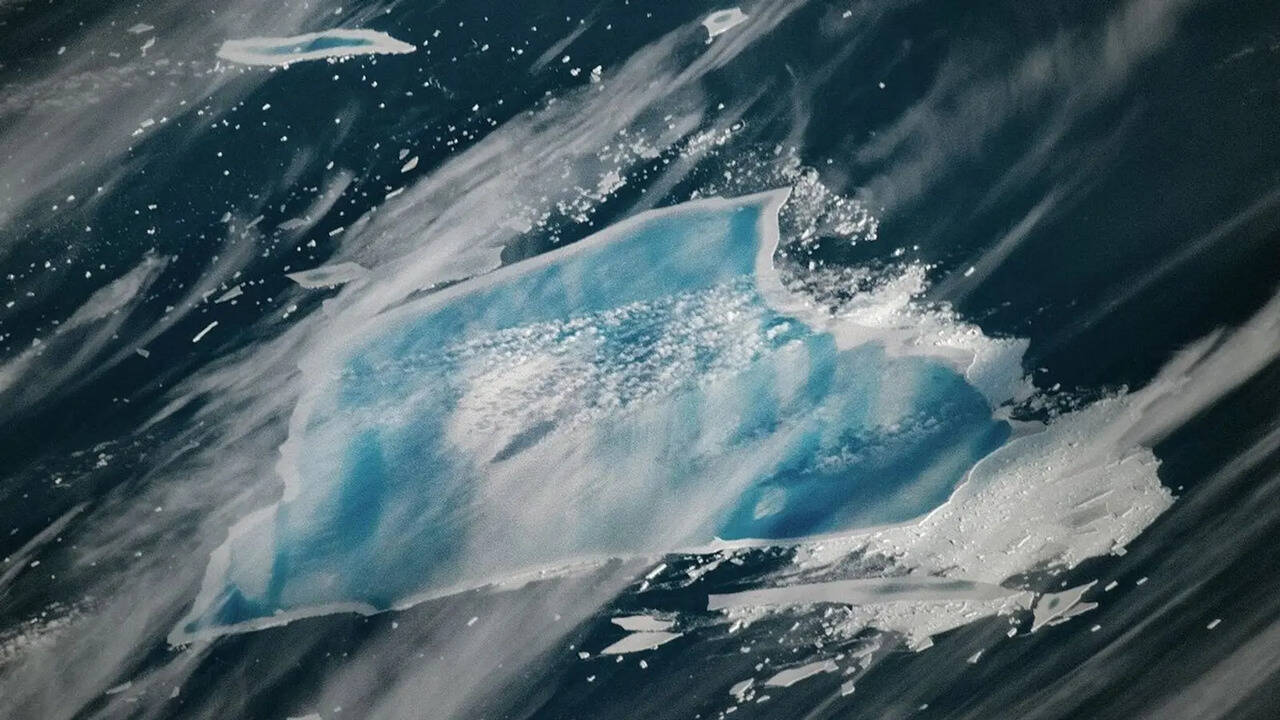
The Times Of India reports: The world's largest iceberg, A-23A, transformed from white to electric blue as it entered warmer waters, a sign of its ageing process. Image Credits: NASA Earth Observatory In nature, the spectacular events always occur at the last possible moment. For many years, the world’s largest iceberg, called A-23A, was just a giant piece of frozen white ice stuck to the bottom of the mud in the Weddell Sea.
In 2026, however, when this giant iceberg reached the warmer northern parts of the sea, a miracle occurred. This huge chunk of ice suddenly started changing its colour from blindingly white to stunning electric blue.Unlike the effect of a camera lens filter or lighting conditions on the giant iceberg, the colour changes that are being experienced here are part of the ageing process of a glacier. When the iceberg was created, it was formed with lots of air bubbles inside.
Background
The scattering of light through the air bubbles results in the white colour of the iceberg. With time, as the giant starts moving into the "Iceberg Alley" of the Southern Ocean, surface melting and refreezing cause the expulsion of the air bubbles. This results in dense, clear ice which absorbs the red and emits the blue colour.A titanic shift observed from aboveThe tracking of this giant has to be done from the skies above, as it is impossible to follow such a giant monster on land or from sea level.
Key facts
- The world's largest iceberg, A-23A, transformed from white to electric blue as it entered warmer waters, a sign of its ageing process.
- Image Credits: NASA Earth Observatory In nature, the spectacular events always occur at the last possible moment.
- For many years, the world’s largest iceberg, called A-23A, was just a giant piece of frozen white ice stuck to the bottom of the mud in the Weddell Sea.
- In 2026, however, when this giant iceberg reached the warmer northern parts of the sea, a miracle occurred.
- When the iceberg was created, it was formed with lots of air bubbles inside.
What this means
The experts have been glued to their computer screens watching this iceberg as it takes its course towards South Georgia Island. It is very difficult to imagine how massive a shift it involves when one speaks of a trillion-ton mass of fresh water shifting into the ocean.The NASA Terra Satellite can be considered one of the most important instruments that provide information about the path that the berg follows. As shown by the information gathered through the special equipment installed on the satellite, the iceberg is not a coherent object anymore but rather a fortress that starts crumbling.
The satellite photographs taken at the beginning of 2026 demonstrate a chain of smaller ice blocks and fragments following the berg. This information enables scientists to make certain predictions regarding places where the iceberg may become stranded, which can have an impact on the animal population of the islands located near the path of the berg.The research findings conveyed via the study Erosion Of Iceberg A-23A Sparks A Surge Of Microscopic Life indicate that the melting of the A-23A iceberg is a two-faced phenomenon since, while disturbing local ocean circulation, it triggers the release of minerals which, as dust in the ice, are accumulated there for many thousands of years.
Originally reported by The Times Of India. This story has been edited and re-presented by BRIC Team.