

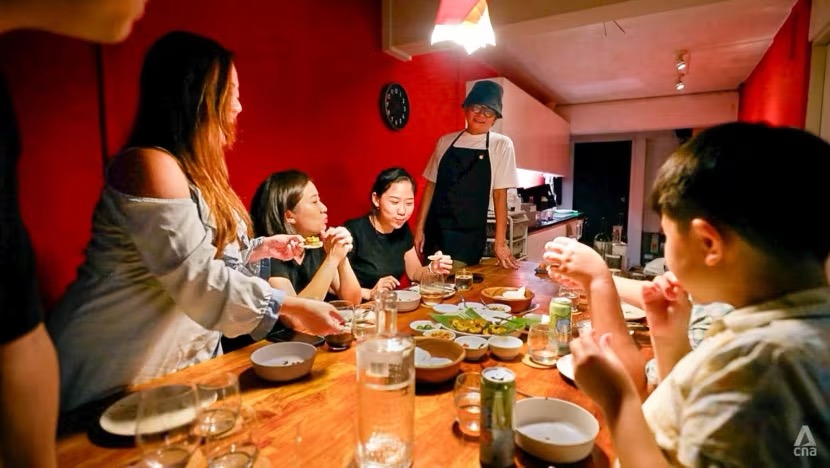
In the bustling heart of Singapore’s public housing landscape, a quiet revolution is unfolding as ordinary residents transform their compact flats into vibrant hubs of commerce. From private dining experiences that tantalize taste buds to cozy salons offering personalized pampering, these home-based ventures represent more than just side gigs; they embody a resilient spirit of innovation amid economic pressures and spatial constraints. As someone who has observed the evolving dynamics of urban living, I believe this trend is not merely a survival tactic but a powerful testament to human adaptability—one that policymakers should nurture rather than stifle with overly rigid rules. By empowering these entrepreneurs, Singapore can foster a more inclusive economy where passion meets practicality, ensuring that even in limited spaces, dreams can flourish without compromise.
Consider the story of individuals like Ng Tiong Jin, who turns his Ang Mo Kio four-room flat into a makeshift restaurant several times a month. The allure of his wagyu steaks draws guests eager for an intimate dining affair, yet behind the scenes, he juggles this with family life, limiting sessions to weekends to avoid disrupting his children’s studies or his wife’s accounting work from the same space. This delicate balance highlights a core challenge: the blurring of professional and personal boundaries. In my view, such setups demand admiration rather than skepticism. These entrepreneurs are not just earning income; they are modeling resourcefulness, teaching their families about perseverance and work ethic. Imagine the lessons imparted to Ng’s kids as they witness their father adapt his cooking methods to minimize smoke, venting it through a utility room to appease neighbors. This ingenuity turns potential conflicts into opportunities for harmony, proving that home-based businesses can enhance community ties if approached thoughtfully.
Yet the path is fraught with obstacles that often test resolve. Space emerges as a perennial foe, with bedrooms doubling as storage and living areas morphing into operational zones. Edward Kim, a hairdresser in Telok Blangah, foresees a day when his growing children claim the room housing his salon, forcing a tough choice: relocate or shutter. Similarly, Nareeza Abdul Rahim, in Punggol, dreams of expanding her facial spa but laments the inability to hire external help under current regulations, which restrict employees to flat residents only. These limitations, I argue, stem from outdated policies that fail to recognize the potential of microenterprises. Why not revise rules to allow vetted part-time assistants or modular expansions within safety guidelines? Singapore’s housing authority could lead by example, piloting programs that provide grants for ergonomic setups or noise-reducing modifications. Such support would not only alleviate physical strains but also boost productivity, turning these ventures into scalable models that contribute more to the national economy.
Family dynamics add another layer of complexity, often straining relationships in ways that corporate jobs seldom do. Nareeza recounts her son’s interruptions during sessions, peeking in with questions about when she’ll finish, leaving her to squeeze in quality time during holidays at the cost of revenue. Chia Jin Fang, who swapped a Michelin-starred kitchen for a home cafe in Boon Lay, echoes this sentiment, operating solo while caring for her grandmother, who has dementia. The overwhelming rush of orders pushes her to rely on unpaid family aid, a setup she knows is unsustainable. In my opinion, this underscores a broader societal issue: the undervaluation of caregiving roles intertwined with entrepreneurship. Policymakers should integrate incentives like tax breaks for family-involved businesses or flexible childcare vouchers tailored for home operators. By doing so, we honor the multifaceted lives of these individuals, who are not just business owners but also parents, spouses, and caregivers. Their ability to find fulfillment amid exhaustion—as Pannipa Mitrach does, cooking Thai noodles in Balestier only when her husband can assist—speaks to a profound sense of purpose. After years as a homemaker, her contributions to household finances bring personal joy, a reminder that economic empowerment starts at home.
Regulatory ambiguities further complicate matters, leaving entrepreneurs in a gray area that breeds uncertainty. Food sellers need no formal license but must adhere to safety standards, yet guidelines on equipment—like Chen Delun’s desire for a larger coffee roaster—remain vague. Is it size, noise, or output that defines commercial versus domestic use? Such questions often go unanswered, leading to cautious decisions like shifting to e-commerce instead of expansion. Signage bans frustrate owners like Chia, who crave visibility for walk-ins yet fear enforcement from neighbors’ complaints. I contend that this reactive approach, where monitoring hinges on reports rather than proactive guidance, misses the mark. A dedicated advisory body could offer clear interpretations, workshops on compliance, and even mediation for disputes. Moreover, embracing digital tools—as many do through social media and word of mouth—builds a virtual network, a “digital kampung” as Chen calls it, where bartering and referrals thrive. This organic collaboration, from hairdressers exchanging services with eyelash specialists, illustrates how community-driven solutions can outpace top-down regulations, fostering resilience and innovation.
Beyond individual struggles, these stories reveal economic implications that merit attention. Home-based businesses lower barriers to entry, appealing to those seeking autonomy amid rising costs or job instability. Chen started his roastery after retrenchment, turning adversity into opportunity. In a city-state where land is at a premium and overheads soar, this model democratizes entrepreneurship, allowing diverse voices—from millennials like Chia to immigrants like Pannipa—to participate. Yet suppliers often dismiss them as small-scale, denying access to quality goods, which hampers growth. To counter this, I advocate for industry initiatives like bulk-buying cooperatives or platforms connecting home operators with vendors. Economically, these ventures could inject vitality into local neighborhoods, stimulating micro-economies while reducing commute-related emissions—a win for sustainability.
Critics might argue that relaxing rules risks overcrowding or safety lapses, but evidence suggests otherwise. With mindful practices like Ng’s low-and-slow cooking or Chen’s timed roasting, disturbances are minimized. Enforcement should evolve to encourage best practices, perhaps through certification badges that signal compliance, boosting customer trust. Ultimately, supporting home-based hustles aligns with Singapore’s vision of a smart nation where technology and creativity converge. Apps for booking, noise monitoring, or virtual tours could enhance operations, while data analytics help predict trends.
In conclusion, the realities of running a business from a Singapore flat demand creativity, compromise, and courage. These entrepreneurs are not anomalies; they are pioneers redefining work in an era of flux. By addressing spatial, familial, and regulatory challenges through targeted policies, we can amplify their impact, creating an ecosystem where home is not just a refuge but a launchpad for ambition. As I see it, embracing this hustle enriches society, promoting inclusivity, sustainability, and innovation. Let us celebrate these flat dwellers not as outliers but as the heartbeat of a dynamic future, ensuring that in every block, ingenuity thrives unhindered.


