

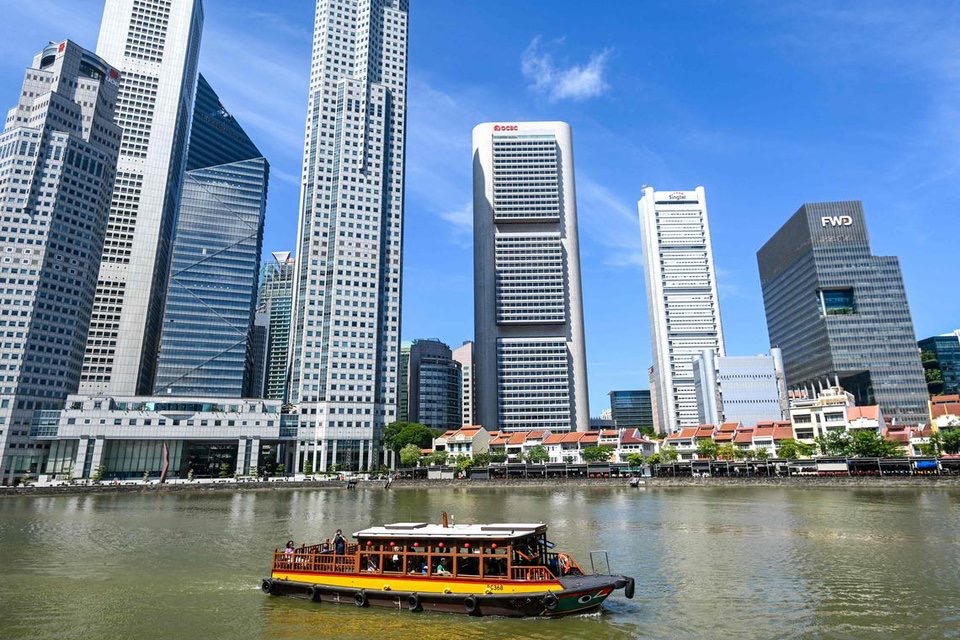
As Singapore celebrates its 60th year, its small and medium-sized enterprises (SMEs) and startups are increasingly looking overseas to fuel growth and resilience. With a small domestic market and rising global uncertainties, international expansion has become critical for these businesses to remain competitive. Enterprise Singapore (EnterpriseSG), the agency championing local business growth, is leading efforts to support this shift, reporting 2,600 internationalization projects in 2024, up from 2,500 the previous year.
Yeoh Mei Ling, EnterpriseSG’s director of markets strategy and policy, emphasizes that accessing new markets, production bases, or technologies is vital for scaling businesses. She notes that companies already operating abroad are diversifying into new regions or reconfiguring supply chains to enhance resilience. However, SMEs and startups approach global expansion differently due to their distinct needs and constraints.
SMEs often face challenges in venturing abroad, as many focus on Singapore’s high-value market, where margins are stronger than in neighboring regions. Ang Yuit, president of the Association of Small and Medium Enterprises (ASME), explains that resource limitations and unfamiliar regulatory environments can deter SMEs, who often lack the flexibility to adapt business models across diverse markets. Despite this, strategic SMEs are finding opportunities, particularly through offshoring to cost-effective locations like Malaysia, the Philippines, or India for specialized fields like IT.
Startups, on the other hand, display a bolder approach, often prioritizing international growth from their early stages. Patrick Lim, CEO of the Action Community for Entrepreneurship (ACE.SG), observes that startups focus on commercial opportunities over fundraising or supply chain diversification. However, they grapple with limited resources and the need for local partners to navigate new markets. ACE.SG supports startups through global missions, such as a recent trip to Taiwan’s Startup Terrace Kaohsiung, and partnerships like one with Western Australia to connect healthcare startups with Perth’s research ecosystem.
South-east Asia remains a prime destination for its proximity, while South Asia, the Middle East, and Africa offer early-mover advantages. Sustainability-driven sectors, like energy efficiency, are also gaining traction. For instance, Barghest Building Performance partnered with a Thai conglomerate to deploy energy-saving systems, supporting net-zero goals. In innovation-heavy fields like biomedical sciences, markets like the US and UK attract Singaporean firms, with companies like Lucence advancing precision medicine through EnterpriseSG’s support.
Singapore’s robust ecosystem, including EnterpriseSG’s GlobalConnect programme and financial grants, alongside trade associations, empowers businesses to go global. Success stories like Kskin, now in over 12 countries, and Epitex, expanding regionally, highlight the potential for agile firms. To thrive, businesses must embrace adaptability, build local partnerships, and invest time in understanding new markets, ensuring long-term success on the global stage.


