

For years, Jakarta’s famous Tanah Abang market was filled with the buzz of merchants selling locally made clothes. In this maze of stalls, Rudi Hendri once proudly sold Indonesian sportswear stitched in nearby factories. But everything changed three years ago when a Chinese businessman walked into his stall with samples that were cheaper and better made.
Rudi did not hesitate. He switched to Chinese suppliers, and his small business grew into three stalls. Now, instead of supporting local factories, he depends on shipments from Chinese partners. As his workers sort through mountains of imported clothes, Rudi is clear about one thing. “If the price is right and the quality is good, I will take it.”
His success is not the full story. Just steps away, other sellers are barely holding on. Samuel Lie used to earn double what he makes now. His long-time clients have vanished, drawn to cheaper options from China. “We cannot compete,” he says, his voice laced with frustration.
What is happening in Tanah Abang is happening across Indonesia. The textile industry, once a backbone of the economy, is being dismantled piece by piece. Factories are closing. Mills are silent. Workers are being sent home, many for the last time. Over three hundred thousand jobs have disappeared since 2023, according to industry estimates.
The collapse is being driven by a tidal wave of Chinese imports. Backed by state loans and aggressive subsidies, Chinese manufacturers are flooding Southeast Asia with products that are cheaper than anything local factories can offer. While the United States has pushed back with new tariffs, those goods are now heading south to nations like Indonesia, where markets are open and competition is fierce.
Indonesia’s imports of Chinese goods jumped more than fifty percent in April alone. This is not about rerouting goods for resale. Indonesian consumers are buying them directly. With China’s domestic demand slowing, its factories are looking outward. Indonesia, with its population of over 280 million, is a perfect target.
In Bandung, a city long known for its fabric mills, shopkeepers now sell imported textiles instead of leftovers from local factories. Erik Kurniawan, a young trader who runs a stall through TikTok livestreams, remembers when everything he sold came from nearby mills. Now, Chinese fabrics dominate his shelves.
Even traditional manufacturers are not safe. In Solo, one of the country’s largest textile factories shut down in March, leaving ten thousand people without work. The factory, owned by Sritex, was once a pillar of the local economy. Families relied on it for steady incomes, and generations found employment within its walls.
Tumi, a woman who worked at the factory for thirty years, now sells spicy chicken outside her home to survive. Her friend Sri Lestari, who spent twenty four years at Sritex, works beside her. They both teared up remembering the day they were told to go home. “Everything in this house was built from that salary,” Tumi says, pointing at old photographs of her coworkers and family. The income from her food stall barely covers school fees for her children.
The emotional cost is staggering. Years of loyalty, skills, and routine have been replaced with uncertainty. Factories do not disappear quietly. They leave behind communities, dreams, and futures that now hang in the balance.
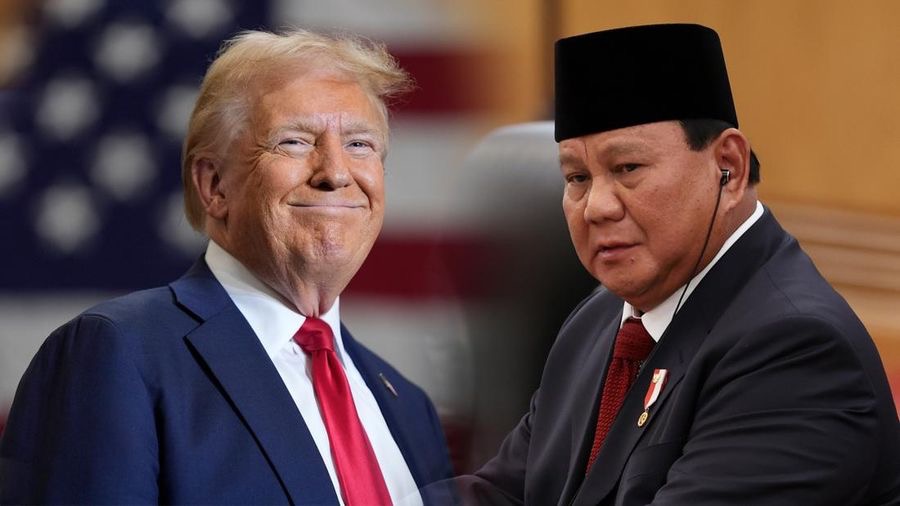
Indonesia’s leaders are alarmed. The previous president floated the idea of a two hundred percent tariff on Chinese goods. President Prabowo Subianto has taken a harder line, calling for action against smuggling ships that bring in textiles from China. But these are stopgap measures in a much deeper crisis.
China has become not just a supplier, but an investor. It is building Indonesia’s infrastructure, financing railways, and buying up natural resources like coal and palm oil. Ties run deep, and economic separation would not be easy.
At the heart of it all is China’s unmatched production power. It can make goods faster, cheaper, and in greater volume than almost any other country. Indonesian factories, built for another era, simply cannot keep up.
There was a time when China needed Indonesia’s raw materials. Now Indonesia needs China’s investment and, increasingly, its products. When China’s economy slows by one percent, Indonesia’s growth falls by almost a third of that. The connection is that close.
But that does not mean there is no way forward. Tariffs might offer short term protection, but they are not a long term solution. What Indonesia needs is a strategy that includes smarter trade policies, investment in innovation, and a serious commitment to rebuilding its industrial strength.
A few sectors still hold ground. Traditional batik fabrics, with their intricate designs and cultural significance, are still made locally and cherished by Indonesians. But even this market is small comfort when set against the growing mountain of cheap imports.
One symbol of this deepening relationship is the Whoosh train, a high speed rail line built by China. It cuts across the countryside from Jakarta to Bandung, moving at full speed past shuttered mills and empty warehouses that once fueled local economies.
In the markets near the train line, Chinese signage, fabrics, and goods dominate. What used to be Indonesian is now made in China. As the country rides the fast track to modernization, it risks losing the industries that once powered its journey.
For the workers left behind in Solo, Bandung, and Jakarta, the future feels uncertain. Their stories are not about numbers or trade flows. They are about lives uprooted, dreams paused, and a quiet struggle to survive in a country caught between opportunity and dependency.


