

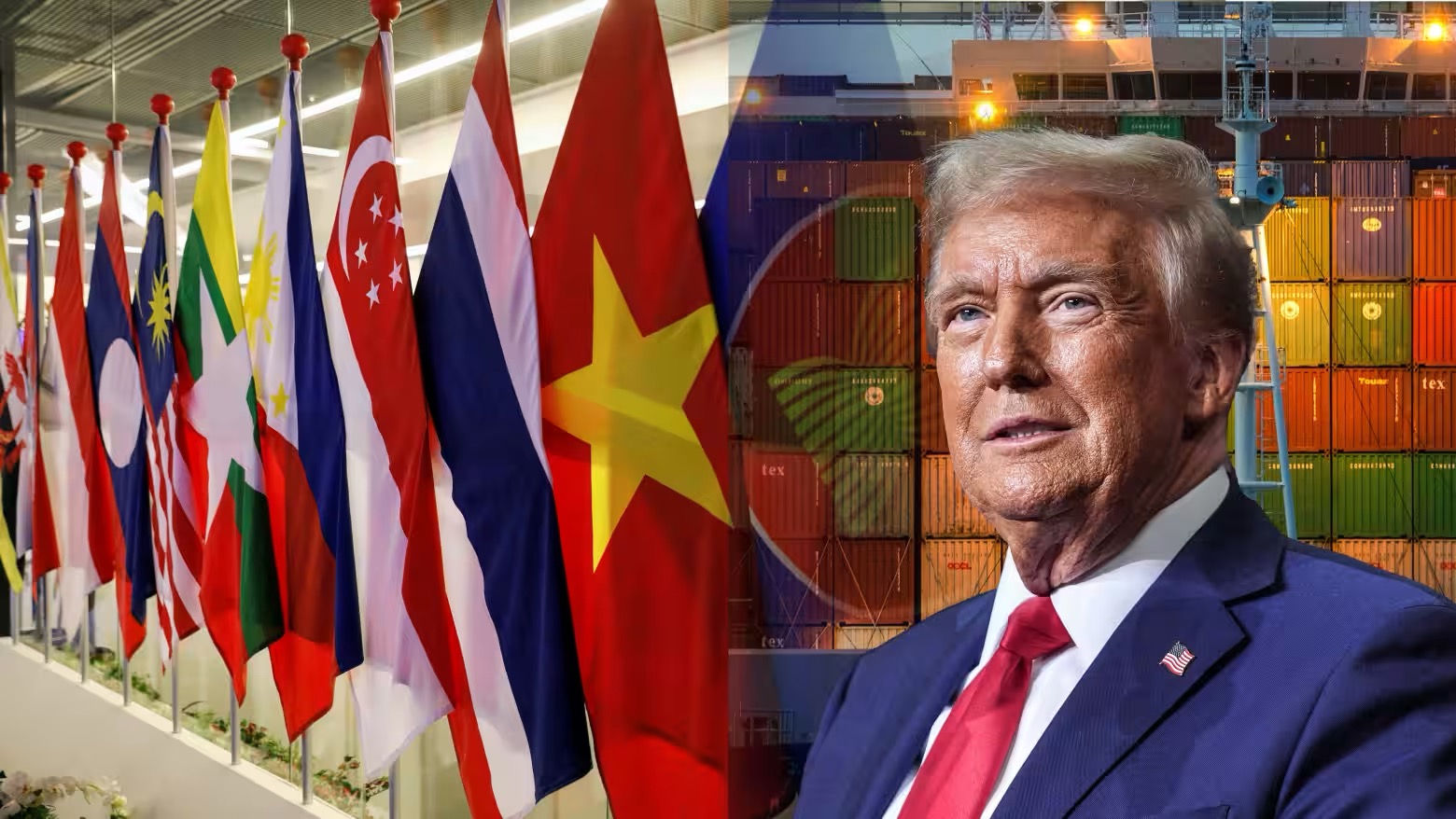
Business with Donald Trump has never been easy. His demands are tough, his tone often aggressive, and his approach always tilted toward gaining the upper hand. Yet, despite the imbalance, several Asian countries continue to engage with Trump era negotiations. The question is why.
The answer lies in the complex mix of economic dependency, strategic calculation, and the harsh realities of global power politics. For many of these countries, dealing with a demanding partner like Trump is still better than being left out of the global economic flow.
Trump’s return to influence, whether as President or political powerbroker, has reshaped the way America deals with its trading partners. He insists on bilateral terms, often making it clear that the United States will only play by its own rules.
This stance has left many Asian countries scrambling to stay in the game. Nations like Japan, South Korea, and even smaller Southeast Asian economies such as Vietnam, the Philippines, and Thailand are aware that any access to the US market must now come with stricter terms.
Trade deficits, tariffs, and technology sharing are hot topics under Trump. Yet, Asian countries continue to sign deals. Even when the benefits appear lopsided, the fear of losing access to the American consumer base, the largest in the world, is often enough to keep them at the table.
Trump’s business first approach is shaped by a belief in dominance. In his view, America is the brand, and everyone else is a buyer or competitor. That mindset translates into deals that usually lean in favor of Washington.
He demands stronger intellectual property protection, insists on tariffs to protect American industries, and often links trade access to political loyalty. For example, countries hesitant to align with US foreign policy goals sometimes find themselves on the receiving end of new trade restrictions.
During his past term, he often used trade as leverage to influence decisions on defense spending, strategic alignment, and even immigration rules. He continues to view alliances through a transactional lens, a give and take measured in dollars, not values.
Despite the imbalance, many Asian leaders believe that engaging with Trump is better than isolation. In practical terms, the alternatives are limited.
China may offer massive trade opportunities, but many countries remain cautious of being overdependent on Beijing. India is growing but cannot yet match American consumer demand. The European Union is too far removed from Asia’s day to day commercial flow.
For smaller countries in Southeast Asia, the dilemma is even sharper. Nations like Malaysia, Indonesia, and Vietnam need both Chinese investment and American market access. They do not have the leverage to negotiate on equal terms. So they bend, but try not to break.
In many cases, the deals are structured not for immediate gain, but for long term survival. Even if the terms are tough, these countries hope the relationship will bring in future investment, security support, and technological access.
Thailand’s recent effort to expand trade with the United States, despite Trump’s unpredictable stance, reflects this logic. Thai officials know that American tourists, investors, and supply chains are essential to keeping their economy stable.
Vietnam, too, has gone out of its way to balance relations. While growing trade with China, Hanoi continues to comply with many US demands, including tighter control on tech exports and stricter import regulations. The reason is clear, access to American markets is vital for Vietnamese exports.
Even when Trump publicly criticizes these countries for trade imbalances, their governments keep the dialogue going. In their view, a difficult partner is still better than a disengaged one.
There is also a security angle. Many Asian governments see trade deals with the United States as part of a larger strategic relationship. Defense cooperation, intelligence sharing, and regional stability often come bundled with economic ties.
Countries like South Korea and Japan are obvious examples, but even the Philippines and Singapore rely on the US for military cooperation and strategic balance in the South China Sea. By staying in good economic standing, they protect their broader national interests.
This dependency also explains why Trump’s tough style has not pushed these countries away. They need the US not only for trade, but also for geopolitical insurance.
Over time, Asian governments have developed their own coping strategies. They give in where they must, push back quietly when possible, and diversify their partnerships to avoid total reliance on any single power.
India has emerged as a new partner in many trade routes, and Southeast Asian countries are exploring regional trade blocks to increase their leverage. Still, the United States remains a pillar of global commerce, and Trump’s influence is too significant to ignore.
Some leaders have even adapted to his style. They flatter, negotiate directly, and try to stay off his radar when tensions rise. It is not ideal diplomacy, but it is what works.
In the end, most Asian leaders agree on one point. Dealing with Trump may be difficult, but disengaging from the United States would be worse.
They sign the deal not because it is fair, but because the cost of walking away is too high. They manage the imbalance because global trade is not about equality, but about opportunity.
Trump knows this. And so do his partners.


